
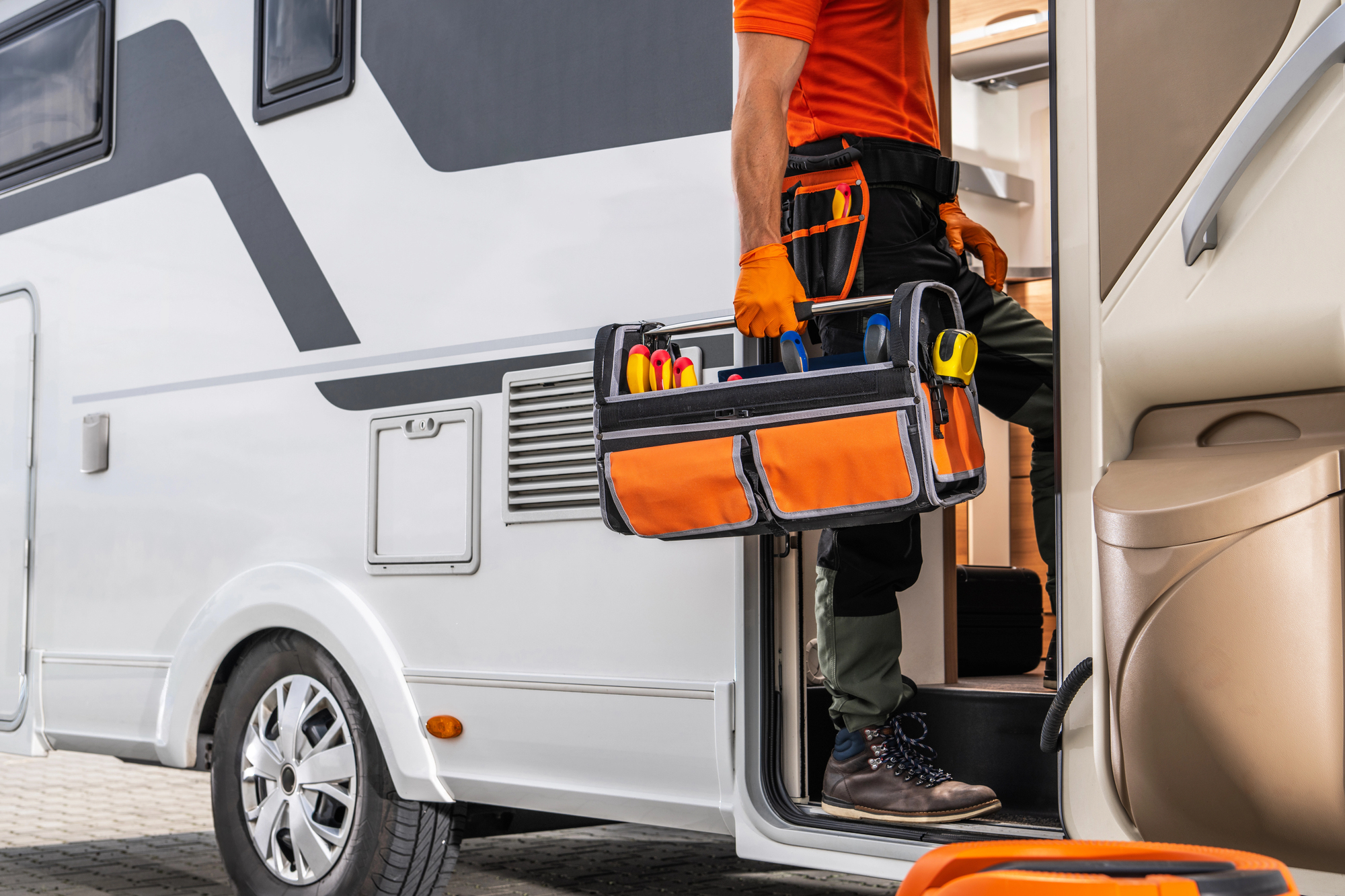
If you have had your RV stored all winter, that first warm weekend feels like freedom. Before you hit the road, it is important to make sure your RV is fully ready for travel season.
At All Purpose Garages in Overland Park, many of our tenants store their RVs in spacious 45-foot garage units with power access and 24-hour entry. Whether this is your first season pulling it out of storage or you are a seasoned road-tripper, this step-by-step guide, along with trusted RV resources, will help you avoid costly surprises.
Before starting the engine, inspect your RV carefully from top to bottom.
Your roof is one of the most important and most vulnerable parts of your RV. Storing your RV inside an enclosed, insulated unit at All Purpose Garages helps reduce prolonged exposure to UV rays, heavy rain, snow, and freeze-thaw cycles that commonly accelerate seal deterioration and roof damage. But, even when stored indoors, seasonal temperature changes can cause sealant to expand and contract, leading to cracks or separation over time.
Start by safely accessing the roof if your RV is designed to support foot traffic. If not, use a ladder and visually inspect from the edges. Look closely at:
Press gently around vent openings and seams to check for soft areas that could indicate trapped moisture. Soft spots may signal water intrusion that occurred during heavy rains before storage.
Next, inspect exterior sidewalls and trim:
Water intrusion is the most expensive and most common RV repair. Small cracks in sealant can quickly turn into structural damage if ignored. Resealing minor gaps in the spring is far less costly than repairing rot, delamination, or mold later.
Taking an extra 20 to 30 minutes for a thorough exterior inspection can save thousands of dollars in repairs and ensure your first trip of the season starts without unexpected surprises.
Mice, squirrels, insects, and even birds can squeeze into surprisingly small openings and cause expensive damage in a short amount of time.
Begin with a thorough visual inspection of the exterior.
Look for:
Open all exterior compartments and check corners carefully. Rodents often nest near batteries, behind stored gear, or inside unused compartments.
Next, inspect underneath the RV.
Move inside the RV and check:
If you notice a musty smell, droppings, shredded paper, or food packaging damage, investigate further before running systems.
Rodents commonly chew electrical wiring and insulation. Damaged wiring can create fire hazards or cause system failures that are difficult to diagnose later.
Before starting your engine for the first time, double-check the exhaust pipe to ensure nothing is blocking airflow. Nests inside exhaust systems are more common than many RV owners realize.
Keeping your RV in a fully enclosed garage unit at All Purpose Garages significantly limits exposure to outdoor nesting environments, helping reduce the risk of rodents and insects accessing wiring, insulation, and plumbing systems.
YouTube - Changing Lanes: RV Pest Control (Avoid Rodents / Bugs / Spiders)!
Your RV tires carry significant weight, and long periods of sitting in one position can stress the sidewalls and create flat spots. Even when stored indoors, seasonal temperature swings can affect air pressure and rubber integrity.
Begin with a slow walk-around inspection of every tire, including the spare.
Look closely for:
Pay special attention to the inside sidewalls if accessible. Damage is often missed because owners only check the outer-facing surface.
Next, check tire age. Even if tread looks good, RV tires typically age out before they wear out. Look for the DOT date code stamped on the sidewall. If tires are approaching five to seven years old, it may be time to consider replacement regardless of tread depth.
Check inflation using a quality tire pressure gauge. Inflate each tire to the manufacturer’s recommended PSI for your specific load. Underinflated tires can overheat and fail, while overinflated tires reduce traction and ride stability.
If your RV has been stationary for several months:
For towable RVs, also check:
Tire failure is one of the most common causes of roadside breakdowns for RV owners. A careful spring inspection significantly reduces the risk of blowouts during your first trip of the season.
YouTube - Campers Inn RV: Taking Your RV Out of Storage? Here's How to Inspect Your RV Tires for Safety | RV Maintenance
Taking time to inspect and properly inflate your tires before leaving storage ensures safer handling, better fuel efficiency, and peace of mind on the road.
Long periods of inactivity can drain batteries, loosen connections, and expose minor electrical weaknesses that only show up once systems are powered again. Spring startup is the ideal time to thoroughly inspect and test your RV’s electrical system before relying on it during travel. If your RV has been stored in a powered unit with 30-amp or 50-amp upgrade options, your battery may already be maintained, but testing is still essential before travel.
Begin with the house battery and chassis battery.
Inspect for:
Clean any corrosion using a battery cleaning brush and reconnect terminals securely. Use a multimeter to verify voltage levels. Fully charge batteries before operating appliances.
Next, connect to shore power and test:
Flip each breaker off and back on to ensure proper function. Listen for unusual sounds from the converter or inverter when power is applied.
Catching weak batteries or breaker issues in storage prevents frustration at a campground or roadside stop.
Storing your RV in a powered unit at All Purpose Garages allows you to maintain batteries with 30-amp or 50-amp service options, reducing the likelihood of deep discharge and electrical deterioration during the off-season .
Plug into shore power and test interior outlets. Briefly run lights, fans, refrigerator, and air conditioning. Inspect the breaker panel to ensure nothing has tripped during storage.
YouTube - Jouppi Outdoors: Understanding RV Electrical Systems: Basic Troubleshooting Tutorial
Your RV’s plumbing system is particularly vulnerable to winter stress, so spring startup should follow a clear, structured checklist.
Begin by reversing the winterization process.
Pay attention to water pressure and flow consistency. Cloudy or sputtering water may indicate lingering antifreeze or trapped air in the system.
Once antifreeze is fully cleared, sanitize the system to eliminate bacteria and odors.
Proper sanitizing ensures safe drinking water and helps prevent algae or bacterial growth during the travel season.
NRFTA: Is Using Bleach Water Safe to Sanitize Your RV Water System? Let’s Set the Record Straight
After flushing and sanitizing, inspect the system under pressure.
Any unexplained cycling or damp areas may signal a small leak that should be addressed before travel.
Spring is also the ideal time to inspect waste management components.
Addressing stiff valves or aging hoses now prevents messy issues during your first trip.
Storing your RV in an enclosed garage unit at All Purpose Garages helps reduce extreme temperature swings and freeze-thaw stress on plumbing lines, seals, and fittings during winter months, minimizing the risk of cracks and leaks when you bring it back into service.
Go RVING - Understanding RV Water Systems, Sewer Lines, And Water Tanks
Safety systems should never be assumed functional after months of storage. Batteries weaken, wiring connections can loosen, and exterior lighting issues may not be obvious until you are already on the road. A structured safety check ensures your first trip of the season starts securely.
Start inside the RV and confirm all life-safety systems are fully operational.
Even if detectors appear functional, replacing batteries at the start of the season is inexpensive insurance. Dust accumulation during storage can also affect sensor performance, so gently vacuum vents on detectors if needed.
Before operating propane appliances, verify the system is secure.
If you suspect a leak, shut off the system immediately and have it inspected before travel.
YouTube - Camping World Tutorials: How To Connect and Turn On RV Propane | RV BasicsConfirm Exterior Lighting and Signals
Proper lighting is critical for road safety.
Have someone stand behind the RV while you test signals, or use reflective surfaces to verify operation. Replace any dim or flickering bulbs before departure.
For towable RVs, carefully examine all connection points.
Improper hitch setup is one of the leading causes of towing incidents.
Finally, ensure emergency supplies are stocked and accessible.
These items are often forgotten during off-season storage but are essential for safe travel.
Because All Purpose Garages provides secure, enclosed units with security cameras, your RV remains protected from vandalism, theft, and weather-related exterior damage that can sometimes affect lighting, wiring, and safety components during long-term outdoor storage.
If you own a motorhome or towable RV, the mechanical systems deserve careful attention before your first trip of the season. Extended storage allows fluids to settle, seals to dry slightly, and small issues to develop unnoticed. A structured mechanical check helps prevent roadside breakdowns.
Begin with a full fluid review before starting the engine.
Look for discoloration, unusual odors, or contamination. Milky oil or low coolant levels may indicate larger concerns that should be addressed before travel.
Rubber components can dry and crack during storage.
Small leaks often appear after the engine is first restarted in spring.
Once visual inspections are complete:
Letting the engine fully warm helps circulate fluids and identify potential cooling or fuel system issues.
Safety depends on reliable stopping power.
For motorhomes, air suspension systems should be checked for proper inflation and response.
If your RV is towable, focus on running gear and structural components.
Wheel bearing maintenance is especially important after long storage periods.
If equipped, test onboard generator systems.
Generators that sit unused for extended periods can develop fuel varnish or carburetor issues.
Addressing minor mechanical concerns in the spring helps prevent costly repairs mid-season and ensures dependable performance on the road.
Storing your RV in a fully enclosed structure at All Purpose Garages helps protect critical mechanical components from prolonged exposure to moisture, snow, and UV damage , which can accelerate corrosion and wear in outdoor storage environments.
Even insulated units can accumulate dust during winter storage.
Clean and wipe down surfaces, vacuum floors, wash bedding, and check pantry items for expiration. Replace old batteries in remotes and flashlights and restock emergency supplies.
If your RV has changed or your needs have grown, you may want a wider 20-foot unit, a man-door for easier access, or upgraded 30-amp or 50-amp power options. You can view available unit sizes and rent online anytime. With 24-hour access - and your RV all prepped for the season! - you are ready whenever the road calls.
Taking the time to follow this checklist ensures your first trip of the season starts smoothly, safely, and without unexpected repairs.