
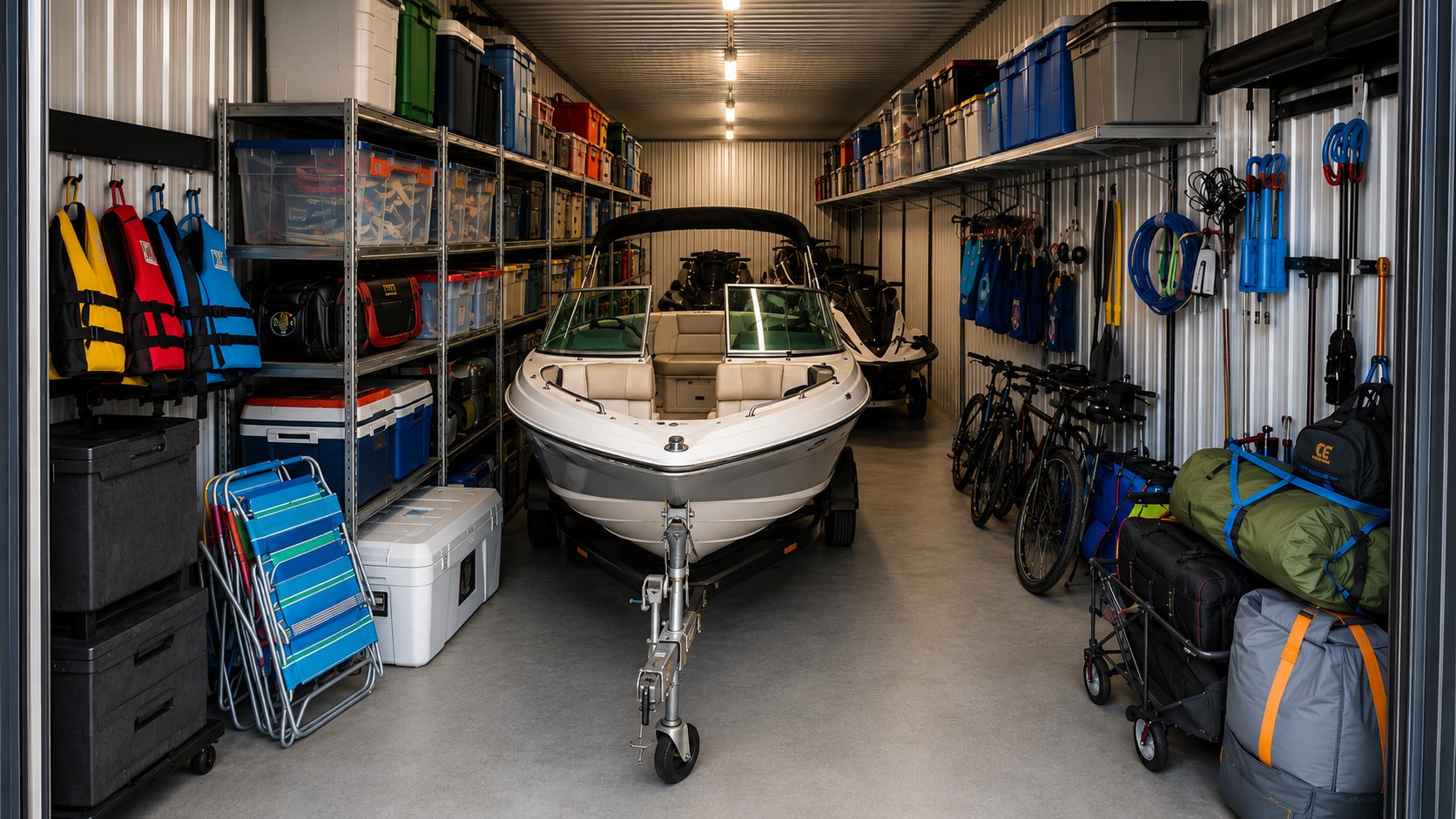
That is where an organized storage unit can make a real difference.
A well-organized storage unit should work like a launch zone for summer. Whether your family is heading to the lake, loading the RV, packing for a ball tournament, getting the camper ready, or preparing for a longer road trip, the right setup can help you spend less time searching and more time actually enjoying the equipment you invested in. These practical tips can help your storage space work better from the very first trip of the season.
Before you start stacking bins or moving things around, think about how your family actually uses the equipment.
Instead of organizing only by item type, organize by activity. For example:
This helps prevent the classic storage problem where the cooler is in one corner, the life jackets are in another, the towels are at home, and the sunscreen is expired anyway.
If your family often does lake weekends, keep the lake gear together. If you take an RV trip every summer, create an RV section. If you have kids in travel sports, keep chairs, canopy tents, wagon, water jugs, and sideline supplies grouped in one place.
The goal is simple: when it is time to go, you should be able to grab the category, not hunt for each item one by one.
Not everything in your storage unit needs to be easy to reach every week. But the gear you use most often should be right up front.
Create a “weekend ready” zone near the entrance of the unit for the items you are most likely to grab on a Friday afternoon or Saturday morning. This might include:
This area should stay flexible. In June, it may be lake gear. In July, it may be RV supplies. In August, it may shift toward sports equipment or back-to-school tournament travel. The point is not to make the storage unit perfectly staged forever. The point is to make the next trip easier.
Small items are what make recreation storage frustrating.
The boat is obvious. The RV is obvious. The bikes are obvious. But the pump adapter, the battery charger, the swim goggles, the extra hitch pin, the bug spray, the fire starters, and the marshmallow skewers are the things that disappear.
Clear bins are helpful because you can see what is inside without opening every container. They work especially well for smaller categories like:
For anything you use frequently, avoid overly large bins. One giant “summer stuff” bin sounds efficient until you have to dig through pool noodles, bug spray, towels, and random bungee cords to find one small adapter.
Smaller, labeled bins are usually better for weekend-warrior use because they let you grab only what you need.
A good label is not just for you. It is for your spouse, your teenager, your neighbor helping load up, or the version of you who is trying to find something quickly before leaving town. Instead of vague labels like “miscellaneous” or “lake,” make labels specific enough to be useful.
Better labels might include:
This is especially helpful for families where one person usually knows where everything is. A well-labeled unit makes it easier for everyone to help. That matters on a busy summer weekend. The more people who can find and put away gear correctly, the less the storage unit becomes one person’s job.
Some gear goes on almost every trip. Instead of rebuilding the same supply pile every weekend, create a few ready-to-go bags or bins.
For example, a lake day bin might include sunscreen, bug spray, swim goggles, towels, wet bags, basic first aid, waterproof phone pouches, and snacks that can handle storage.
A camping kitchen bin might include plates, utensils, paper towels, trash bags, foil, lighters, dish soap, cutting board, and a basic pan or pot.
An RV setup bin might include leveling blocks, gloves, sewer hose supplies, water pressure regulator, adapters, cords, flashlight, and basic tools.
A sports tournament bin might include a pop-up shade, folding chairs, cooling towels, sunscreen, ponchos, snacks, and a portable charger.
When the basics are already packed, summer outings feel much less complicated. You can still customize for each trip, but you are not starting from zero every time.
Good storage is not just about neatness. It is about making the space easy and safe to use.
Store heavy items low, especially things like toolboxes, batteries, generators, large coolers, bins of equipment, and camp cooking supplies. This reduces the chance of something falling and makes loading easier.
Items you use often should be at waist or chest height when possible. Nobody wants to wrestle a heavy bin off a high shelf every weekend.
Lighter, less frequently used items can go higher. That might include extra sleeping bags, seasonal decorations, backup gear, or supplies for trips that only happen once or twice a year.
A simple rule: the more often you use it, the easier it should be to reach.
This is one of the most overlooked storage tips, and one of the most important.
A storage unit packed wall-to-wall may technically hold everything, but it will not work well for a family that uses the space often. If you have to unload half the unit to reach the tent, bikes, life jackets, or trailer supplies, the organization is not doing its job.
Leave a walking path through the unit whenever possible. Even a narrow aisle can make a big difference.
For larger equipment, think about access before parking or stacking. Can you reach the side doors? Can you get to the hitch? Can you access the shelves? Can you grab the chairs without moving the bikes? Can you reach the RV supplies without climbing over lake toys?
A storage unit for summer recreation should be easy to use, not just easy to fill.
Shelving can completely change how a storage unit functions.
Instead of stacking bins five high and hoping the one you need is not on the bottom, shelves let you separate categories and access items quickly.
Use shelves for:
For families who use their unit often, shelving also makes cleanup easier. After a trip, items can go back to their assigned place instead of being dropped into a growing pile near the entrance.
That small habit helps keep the unit from turning into summer chaos by the Fourth of July.
After a lake day or camping weekend, not everything should go straight back into its normal spot.
Wet towels, damp life jackets, muddy shoes, dirty coolers, used cookware, and gear that needs repair should have a temporary return zone. This can be a bin, mat, shelf, or clearly marked area near the front of the unit. The purpose is to prevent dirty or damp items from getting mixed in with clean, ready-to-go supplies.
This zone can also be a reminder system. If something lands there, it needs to be cleaned, dried, restocked, repaired, or taken home before the next trip.
For example:
A return zone helps you reset after one trip so the next trip does not begin with yesterday’s problem.
Summer gear usually needs small fixes and quick adjustments. Keeping a basic maintenance kit in your unit can save time and prevent minor issues from derailing a trip.
Depending on what you store, your kit might include:
Boat owners may also want to keep boat-specific supplies like hull cleaner, microfiber towels, dock lines, trailer lock, spare drain plug, and marine-safe cleaning products.
RV owners may want adapters, leveling blocks, gloves, water hose supplies, and a basic checklist.
The goal is not to turn your storage unit into a repair shop. It is simply to have the small things on hand that make getting out the door easier.
A checklist may not sound exciting, but it can save a lot of frustration.
Keep a printed checklist in the unit or saved on your phone. Make one for each major type of outing your family takes.
For a lake day, the checklist might include:
For an RV trip, it might include:
For a camping weekend, it might include:
This is especially helpful at the beginning of the season when everyone is getting back into the rhythm of summer activities.
The best time to organize the unit is not at the start of next summer. It is after each trip.
That does not mean you need to spend hours cleaning and rearranging. A simple 10-minute reset can make the next outing much easier.
After a trip, take a few minutes to:
This is the habit that keeps a storage unit useful. Without a reset, even the best system starts to break down.
A storage unit should make recreation feel easier, not slowly become another project to manage.
Summer is not one single category. Early summer lake days, holiday weekends, sports tournaments, camping trips, RV vacations, and late-summer yard projects can all require different gear. That is why it helps to rotate your storage unit throughout the season.
At the start of summer, move boats, jet skis, camping gear, coolers, and outdoor furniture toward the front. If you have lawn care equipment, make sure the tools used most often are easy to access. If you are planning an RV trip, bring the RV supplies forward a week or two before you leave.
Later in the season, you may want to shift sports gear, tailgating supplies, or fall equipment closer to the entrance. The unit does not have to be reorganized from top to bottom. A seasonal rotation simply keeps the most useful items within reach.
Recreational equipment is an investment. Boats, jet skis, trailers, RV accessories, lawn equipment, bikes, tools, and outdoor gear can add up quickly.
Good organization helps protect that investment by reducing damage, preventing items from being crushed or misplaced, and making it easier to notice when something needs attention.
A few simple habits can help:
The more organized your unit is, the easier it is to protect what you own and keep it ready for the season.
The perfect storage setup is not the one that looks best in a photo. It is the one that fits your real life.
If your family is at the lake every weekend, lake gear should dominate the front of the unit. If your summer revolves around RV travel, build the space around loading and unloading the camper. If you run a lawn care business during the week and use the boat on weekends, create clear zones so work equipment and recreation gear do not fight for the same space.
For weekend warriors, the best storage unit is practical, flexible, and easy to reset.
It should help you say yes more often. Yes to the quick lake day. Yes to the camping weekend. Yes to the long road trip. Yes to using the equipment you already bought because it is clean, accessible, and ready to go.
Summer recreation should not feel like a scavenger hunt.
A well-organized storage unit can make boating, camping, RV travel, jet ski outings, sports weekends, and family vacations easier from the start. With clear zones, labeled bins, ready-to-go kits, accessible gear, and a simple reset routine, your storage unit can become a useful part of your summer rhythm.
You invested in the equipment because you wanted more time outside, more family memories, more weekend freedom, and more ways to enjoy the season.
AP Garages gives recreational users the space to store, organize, and access the gear that makes summer better. Whether you are preparing for quick weekend outings or longer vacations, the right storage setup can help you spend less time searching and more time getting out there.