
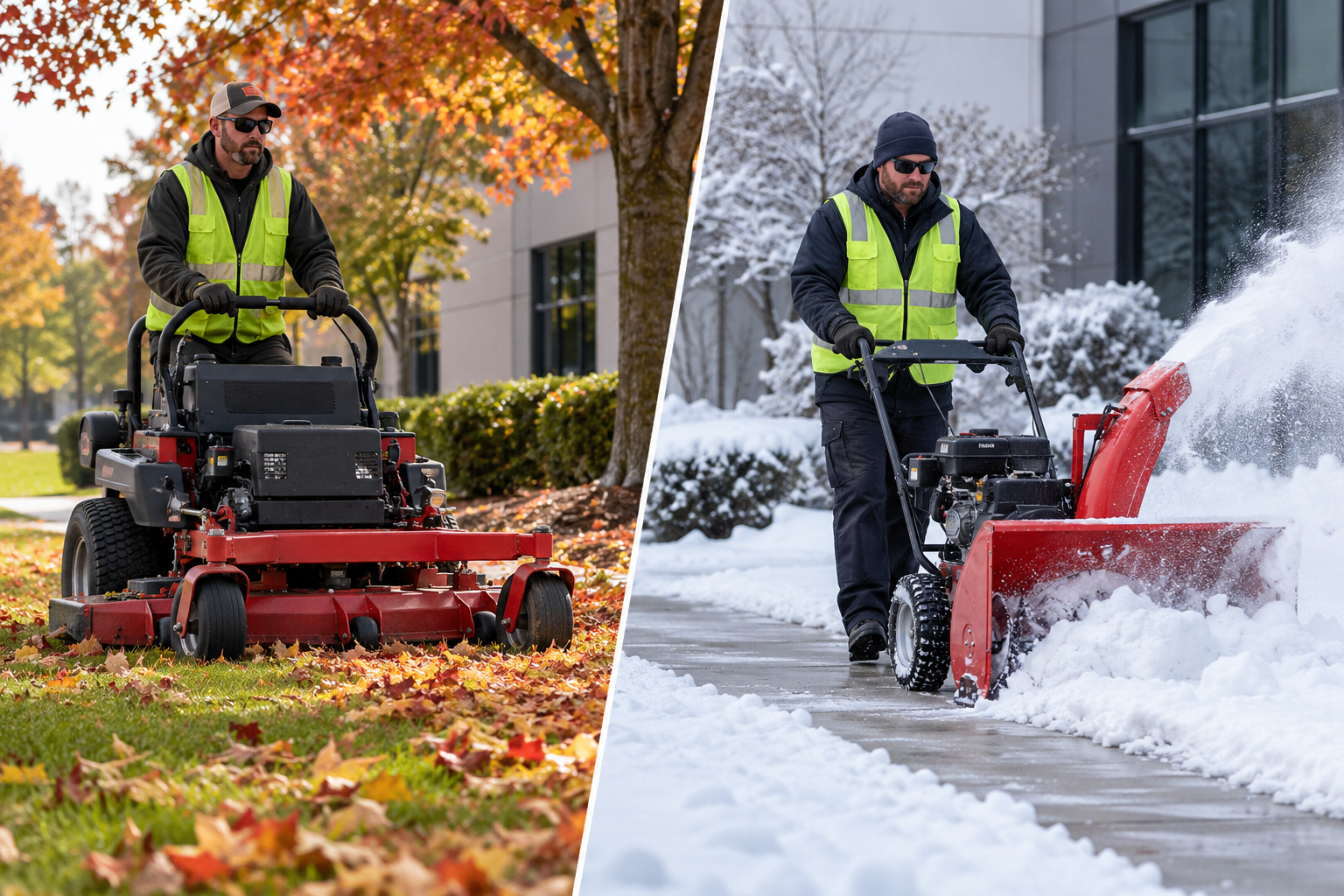
For landscaping companies, property maintenance crews and other seasonal service businesses, fall is not simply the end of one work season. It is also the beginning of another. Mowers, trimmers and warm-weather equipment start coming out of regular use just as snow blowers, spreaders, plows and winter supplies need to become accessible. Without enough storage space, the transition can quickly turn into a complicated shuffle of trailers, machines, tools and materials.
Planning the seasonal equipment changeover before winter arrives can make that transition much easier.
Summer equipment may still be useful late into fall, but most businesses eventually reach a point when certain machines will not be needed again for several months. That makes them good candidates for seasonal storage. Depending on the business, that could include mowers, landscaping attachments, irrigation equipment, warm-weather maintenance tools, trailers or other gear that takes up substantial space. Moving inactive equipment out of the primary work area creates room for the equipment crews will need through winter. It can also reduce the amount of time employees spend moving one machine just to reach another.
Snow and ice work often comes with very little lead time. Once a storm is approaching, crews need to be able to load equipment, hook up trailers and prepare vehicles without reorganizing an entire shop first. Fall is the better time to decide where winter equipment will live and how it will be accessed. Plows, spreaders, snow blowers, hand tools, traffic cones and other frequently used supplies should be positioned so crews can reach them quickly.
A separate storage garage can help by giving businesses additional space to divide active equipment from equipment that is temporarily out of rotation.
For many small contractors, the real storage problem is not that they own too much equipment. It is that different equipment needs to be accessible at different times of year. A landscaping company may need mowers and trimmers front and center through September, then plows and snow equipment in December. A property maintenance company may switch between lawn care, leaf cleanup and winter services over the course of only a few weeks. Using storage as part of that rotation allows a business to keep equipment without requiring every machine to remain in the main shop or yard all year.
Kansas City winters can bring snow, ice, rain, mud and stretches of relatively mild weather, sometimes within the same month. That means businesses may need access to both winter-response equipment and equipment used during warmer conditions.
The most useful storage setup is one that keeps seasonal equipment organized without making it difficult to retrieve. Instead of packing equipment away so tightly that it cannot be reached until spring, businesses can create a layout that allows machines and trailers to move in and out as conditions change.
The best time to reorganize seasonal equipment is before weather creates an urgent need for it. A planned fall changeover gives businesses time to move summer equipment out of the way, bring winter gear forward and make sure crews can get to what they need quickly.
All Purpose Garages offers large storage bays that can give contractors and small businesses additional room for equipment, trailers and seasonal inventory. For companies whose equipment needs change with the weather, that extra space can make the transition from one season to the next much easier to manage.