
One more camping trip. One more afternoon on the lake. One more drive with the top down. One more chance to get the motorcycle or ATV out before the weather changes. That can make deciding when to move a seasonal vehicle into storage surprisingly difficult.
The answer isn't necessarily a date on the calendar. A better approach is to look at how often you're actually using the vehicle, what weather is coming and how much space it's occupying at home.
For many RV, boat and recreational vehicle owners, "winter storage" sounds like something to worry about in November. But storage season often begins much earlier. Once school resumes and fall activities fill the calendar, weekend recreation often becomes less frequent. A vehicle that was used several times in June or July may sit untouched for weeks at a time by late August or September. If that's happening, you may already be entering your personal off-season.
Moving the vehicle into storage doesn't necessarily mean you're finished using it. Convenient access allows you to pull it out for a fall weekend and return it when the trip is over.
Another good signal is much simpler: you're tired of working around it. An RV occupying the driveway, a boat and trailer consuming garage space or an extra vehicle parked where you'd rather keep your everyday car can feel manageable during peak recreation season. It feels different once you're using that equipment only occasionally. At that point, storage does more than protect the vehicle. It gives useful space back to your household.
That's especially valuable as fall arrives and garages begin filling with school equipment, yard tools, fall projects and eventually winter and holiday supplies.
Putting a seasonal vehicle away shouldn't mean parking it and forgetting about it. Use the transition into storage as an opportunity to give it a careful inspection.
Clean the exterior and interior. Remove food, trash and items that could attract pests. Check for leaks, damaged seals or maintenance issues. Review tires, batteries and fluid systems. Boats and RVs may require additional winterization before freezing temperatures arrive. The exact procedure varies considerably by vehicle, engine and plumbing system, so follow the manufacturer's recommendations or work with an appropriate service professional.
Doing this work before the vehicle sits for months also means fewer surprises when the next season begins.
Storage options generally fall into three categories:
For an RV, boat, classic car or other valuable seasonal vehicle that may sit for months at a time, that difference can be significant.
Those questions make accessibility almost as important as protection.
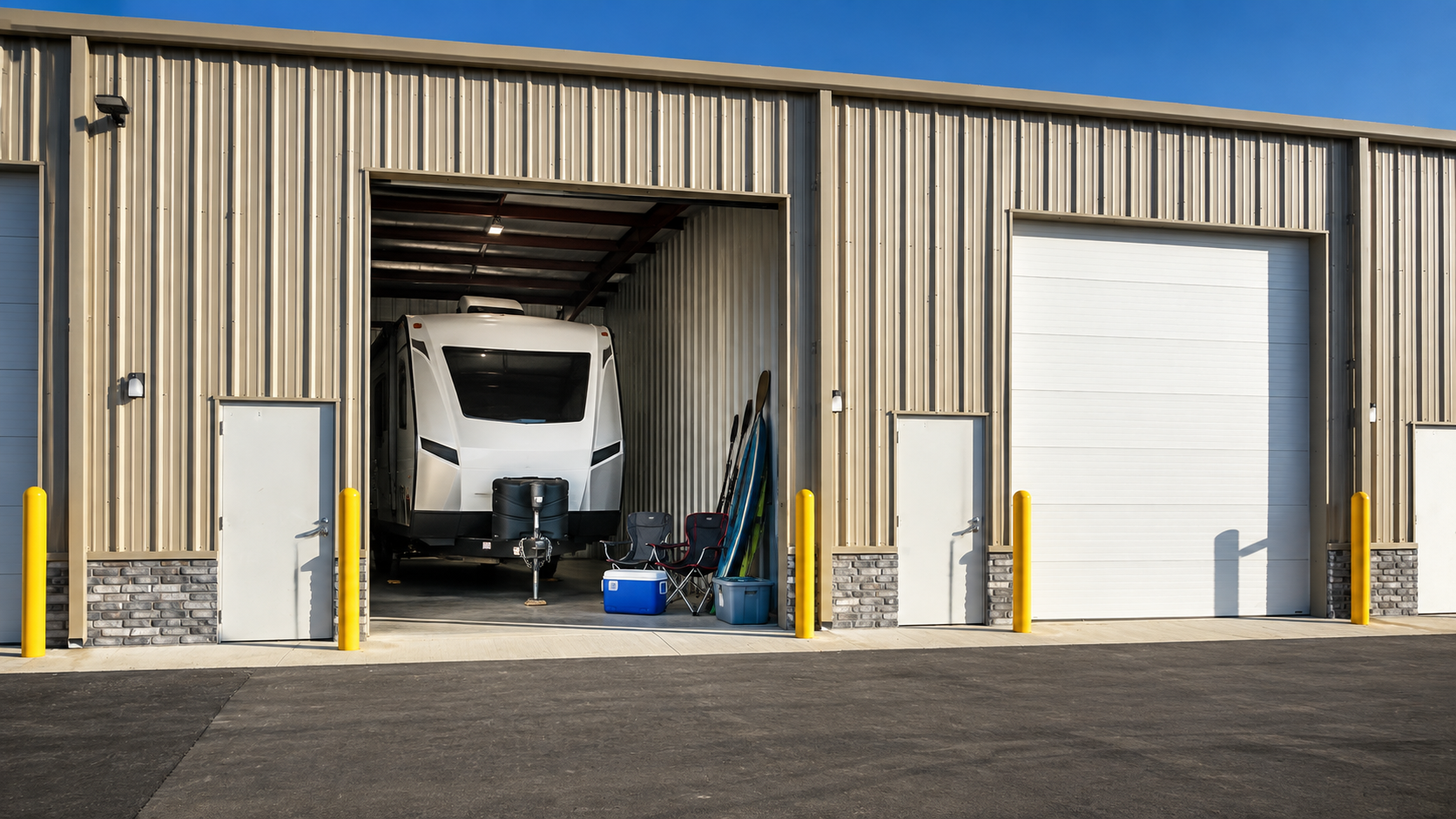
All Purpose Garages offers ground-level drive-up access, oversized doors and 24/7 gated access. Select units have electrical service, with upgrade options described for RV owners who need additional power. Larger spaces also provide room to keep recreational equipment with the vehicle.
Instead of sending the vehicle away for the winter, you're just giving it another garage.
You don't have to predict the last warm weekend of the year. Start preparing when your summer schedule begins slowing down.
Clean and organize equipment. Decide what you expect to use during fall. Take care of maintenance. Determine which vehicles are going to spend more time parked than moving. Then, when you're ready to put something away, storage is already part of the plan.
That makes the transition into fall easier at home and helps ensure your recreational equipment is protected and ready when another season begins.
From RVs and boats to trailers, collector vehicles, ATVs and recreational gear, All Purpose Garages provides oversized enclosed spaces designed for things that simply don't fit comfortably in a traditional storage unit.
Finish the season on your schedule. When you're ready to put the toys away, we'll have a garage waiting for them.